
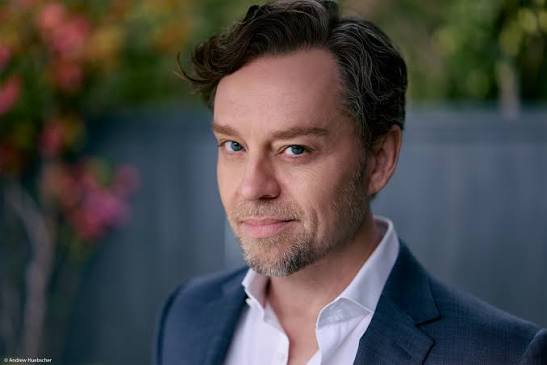
Darren Hayes is joining fellow musicians in advocating for legal action after an AI watchdog disclosed that companies have unlawfully used copyrighted songs from artists like Kylie Minogue, AC/DC, INXS, Crowded House, and others without consent or compensation.
Recently, The Atlantic launched its AI Watchdog database, which enables the public to explore 10 significant datasets of pirated content that have been utilized to train AI models.
This marks the first occasion that the public can access information regarding organizations such as Meta, OpenAI, Anthropic, and Google.
The findings indicated that out of 125 million works shared within the AI development community for training artificial intelligence models, four major music datasets were employed. All without authorization.
It also comprised:
- the 12.3 million-track LAION-DISCO-12M.
- The Library Genesis dataset containing 81 million research papers.
- Two literary datasets, which include the 7.5 million-book Library Genesis.
- Three datasets with 15.2 million videos.
- A stolen collection of 138,000 scripts and subtitles from screen productions.
Millions of Australian works are thought to be among those taken without the consent of their creators. This includes works by Kylie Minogue, AC/DC, Crowded House, INXS, and Slim Dusty
Australian singer-songwriter Darren Hayes urged people to take a stand against copyright theft on social media.
“Like most musicians, I woke up today to discover, thanks to The Atlantic AI watchdog tool, that every single piece of music I’ve ever written or performed over the past 30 years have been stolen without my permission and used to train AI ‘music’ making software.”
‘You shouldn’t be able to rely upon technology to fake a work of art’
“I want to keep this short by saying I’m advocating for the strongest legal retaliation possible,”
“And I’m calling upon all musicians and everybody who works in and makes (barely) a working wage in the music industry to stand up and fight against this copyright theft.”
“I absolutely feel adamant that just because you would like to be something, you shouldn’t be able to rely upon technology to fake a work of art and make you believe you created it.
“I played terrible piano. I have my whole life. I wish that I was a concert pianist, but guess what? I didn’t put in the hours required to learn such a skill. So I may do with the limited piano I can play, and I accept all the limitations and all the outcomes this can give me.
“So far, with just using my voice and a few rudimentary chords, I have been able to sustain a music career because I am proudly a Songwriter. I do the work. I take the risks. I take the failures. I have no fear that a bunch of robots could ever replace what comes from my heart and soul.
“But I absolutely feel violated that all of the hundreds and hundreds and hundreds of hours, blood, sweat and tears that I’ve put into my music, along with every other musician, have been stolen and served up like french fries to a piece of software that spits out shit.
“This isn’t the last you’ll hear me talk about this. But just know I am furious.”
‘No permission. No licence. No payment’
The Australasian Performing Right Association (APRA) and the Australasian Mechanical Copyright Owners Society (AMCOS) have expressed concerns that this is occurring without any compensation for the artists involved. They emphasize that artists are not receiving any payment for their work in this situation.
APRA AMCOS chief executive Dean Ormston had this to say about the situation…
“This week, AI companies are asking the Australian and New Zealand governments for a copyright carve-out,”
“We can show you exactly what they have already taken. No permission. No licence. No payment. These are not bargaining chips; they are the life’s work of Australian and New Zealand songwriters.
“Major tech platforms have not come to the table. Not once. Instead, they have lobbied governments, circulated policy papers, and proposed solutions designed to extinguish any obligation to pay.
“The only path forward is a genuine licensing conversation with the people whose work they have been using.”
‘Artists have not given permission for their work to be used’
The works of Aboriginal and Torres Strait Islander artists, such as Yothu Yindi, Gurrumul, Warumpi Band, William Barton, Christine Anu, Dan Sultan, Emma Donovan, Barkaa, AB Original, and David Gulpilil, were also utilized without obtaining permission.
APRA AMCOS director of Indigenous programs, Leah Flanagan had this to say about the situation…
“In some cases, this is material that has never been available for commercial use by anyone, on any terms,”
“[These] artists have not given permission for their work to be used to train these AI datasets. Many of these recordings carry cultural knowledge, language and connection to country.”
“Their use without consent is not acceptable; these are not just recordings, they are cultural expressions governed by protocols as well as copyright.”
According to APRA AMCOS, if a mandatory licensing framework is not established, creators may lose out on over $500 million in royalties in the next four years.
Source: Music icons are missing out on royalties because their work is stolen by AI
Kristin’s thoughts: I know AI is popular to hate these days, and I understand why. There are legitimate concerns about how it’s being used, especially when it comes at the expense of artists and other creators. But I also believe AI can do a lot of good and has genuinely helped people in ways we shouldn’t overlook. Personally, I don’t see AI itself as inherently good or bad. It’s a tool, and like any tool, it depends on how we choose to use it. I just hope we can find a way to embrace its benefits without forgetting the people who may be affected along the way.